
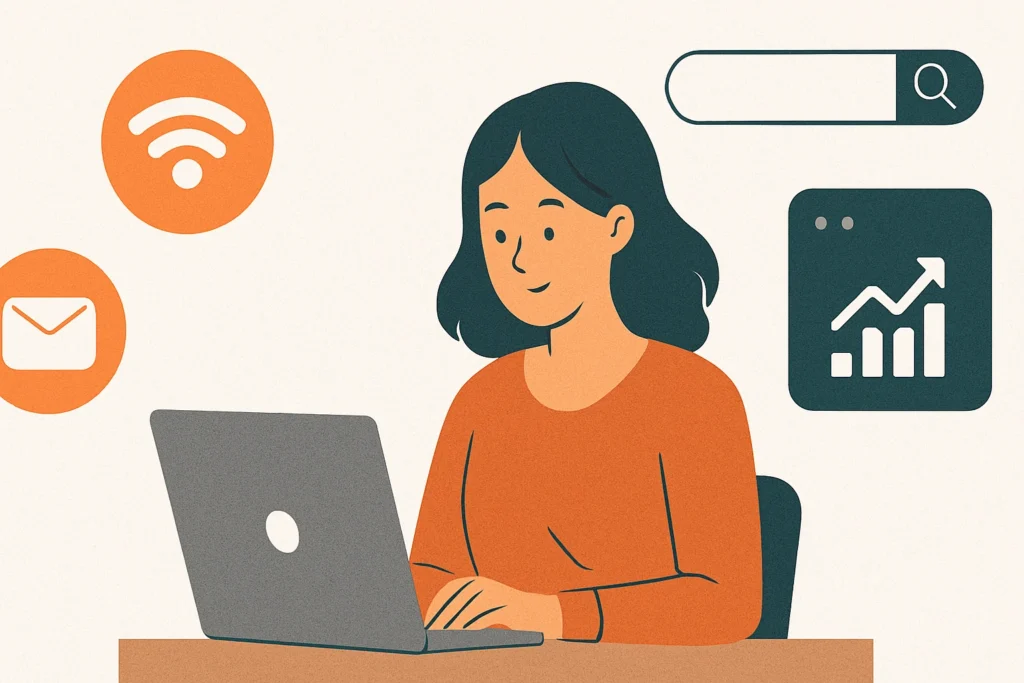
The Power of Digital Marketing: Why It’s the Engine of Modern Business
In today’s hyper connected world, the question for businesses is no longer “Should we use digital marketing?” but rather “How well are we doing it?” From small local shops to global corporations, digital marketing has become the backbone of sustainable growth.
But what exactly makes it so essential? Let’s dive into how digital marketing is reshaping the business landscape.
What is Digital Marketing?
At its core, digital marketing is any marketing effort that uses an electronic device or the internet. Businesses leverage digital channels such as search engines, social media, email, and websites to connect with current and prospective customers.
Why Your Business Needs Digital Marketing
1. Reach a Global Audience
Unlike traditional marketing, which is often limited by geography, digital marketing allows even a small business to reach customers across the globe. Your “storefront” is now open to anyone with an internet connection.
2. Cost-Effectiveness
For startups and small enterprises, digital marketing is a lifesaver. Running a social media campaign or an email newsletter often costs a fraction of the price of a billboard or a TV advertisement, while offering a much higher return on investment (ROI).
3. Precision Targeting
Digital marketing allows you to show your ads specifically to people based on their age, interests, location, and even online behavior. This means you aren’t wasting money showing your products to people who have no interest in them.
4. Measurable Results
One of the biggest advantages is data. With tools like Google Analytics, you can see exactly:
How many people viewed your ad.
How many clicked on it.
How many actually made a purchase.
Key Pillars of a Digital Marketing Strategy
To succeed, businesses usually focus on these core areas:
Search Engine Optimization (SEO): Optimizing your website so it ranks higher on Google search results.
Social Media Marketing (SMM): Engaging with customers on platforms like Instagram, Facebook, and LinkedIn.
Content Marketing: Creating valuable blog posts, videos, and infographics that build trust with your audience.
Email Marketing: Sending personalized messages directly to a customer’s inbox to encourage repeat business.
Pay-Per-Click (PPC): Paid advertisements (like Google Ads) that drive instant traffic to your site.
Conclusion
Digital marketing is not just a trend; it is the future of business. It levels the playing field, allowing small brands to compete with giants by being smarter, faster, and more personal. If you haven’t fully embraced digital strategies yet, now is the time to start.